Use the movement already happening
A hub dynamo uses bicycle-wheel rotation as the proposed energy source.
Why this decision?
The energy strategy is connected to the activity in which cooling is needed.
Physical product · Energy · R&D
Turning a bicycle’s movement into a cooling possibility.
A bicycle-powered wearable neck-cooling concept, connecting energy generation with personal comfort while cycling.
Explore the story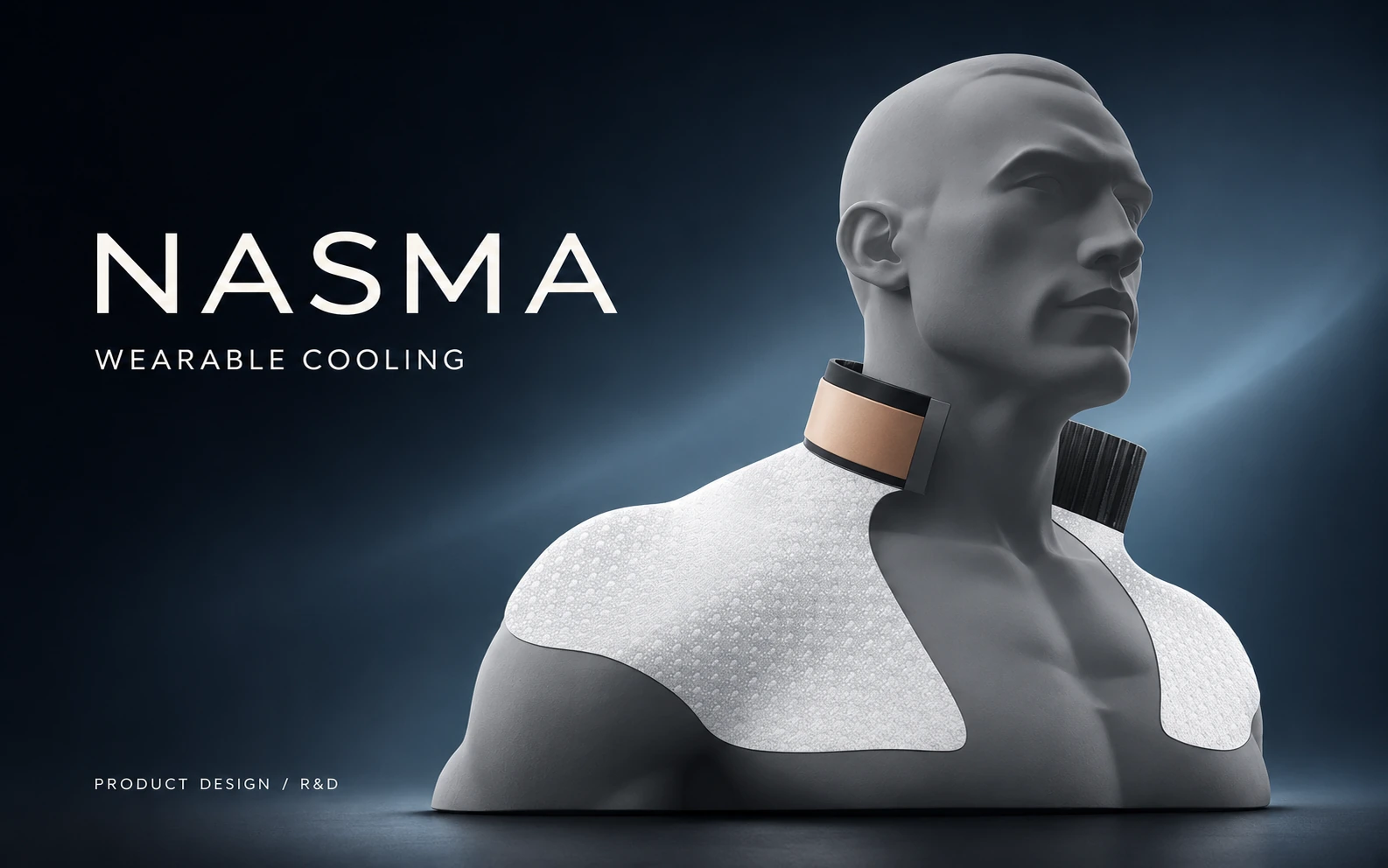 Physical product & energy system
The problem, contribution, key decisions and experience. Switch to Full story for more detail.
Ideation & R&D
Physical product & energy system
Physical product · Energy · R&D
Product concept
THE STORY IN 30 SECONDS
MY CONTRIBUTION
I led ideation and R&D, connecting the cycling discomfort problem to a physical product concept powered by bicycle-wheel rotation.
THE PROBLEM
Cycling creates movement and energy, while heat can make the journey uncomfortable. Nasma explores how a bicycle hub dynamo could support a wearable neck-cooling product, connecting the mobility activity with a personal need.
How could the energy of cycling support a more comfortable ride?
RESEARCH & FRAMING
The concept explores a hub dynamo as the source of electricity and a neck-worn product as the cooling interface. The design question spans the energy available during cycling and the comfort of wearing the product.
THE SYSTEM
The concept connects wheel movement, a hub dynamo, energy storage and a wearable cooling product. The system below explains the proposed relationship between those components.
BEFORE THE SOLUTION
Problem framing
Energy-source exploration
Product concept
Physical prototyping
KEY PRODUCT DECISIONS
A hub dynamo uses bicycle-wheel rotation as the proposed energy source.
The energy strategy is connected to the activity in which cooling is needed.
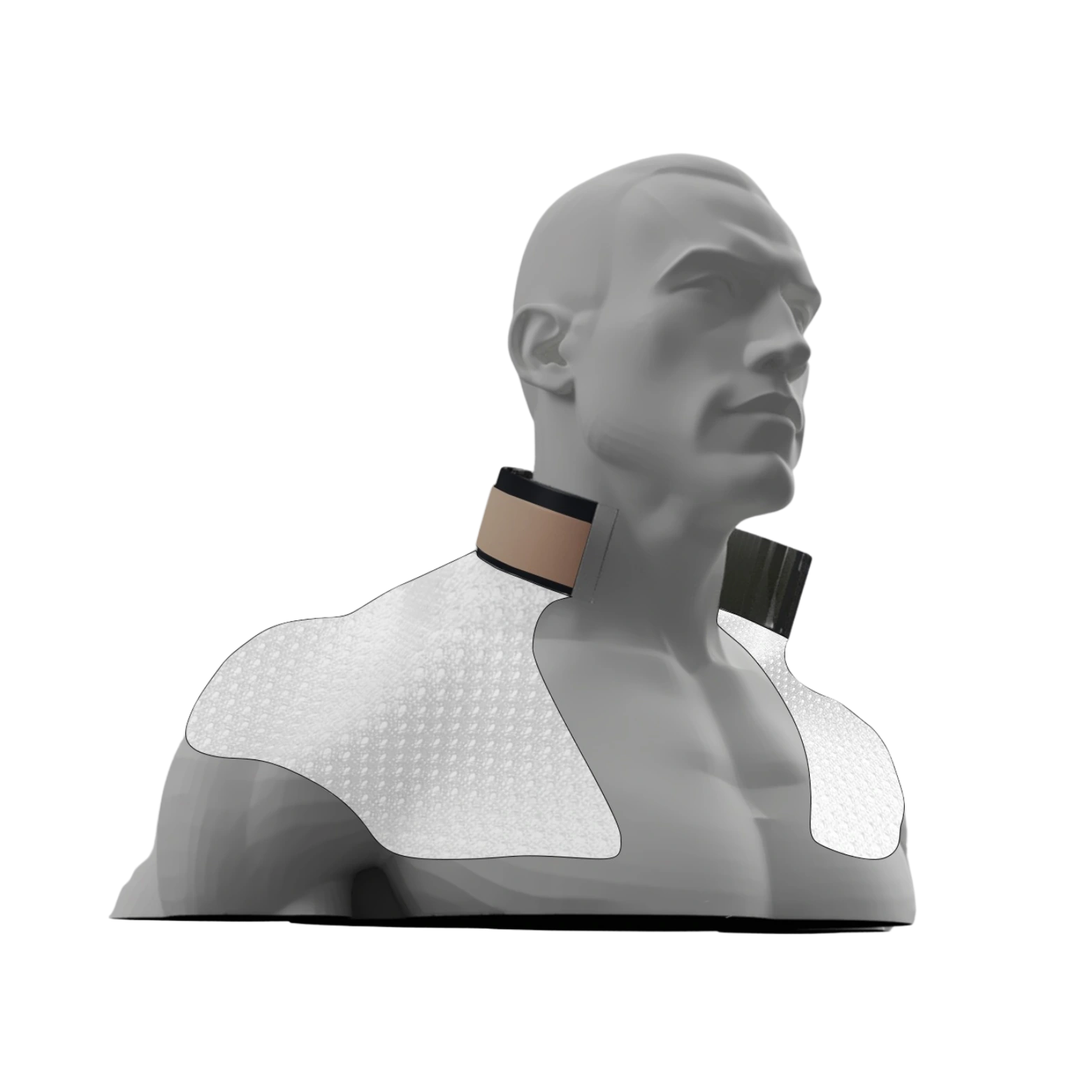
The cooling product takes a neck-worn form.
The wearable interface makes fit, comfort and freedom of movement part of the product question.
Generation, storage and cooling are considered together.
A wearable depends on the energy system around it as well as its physical form.
PRODUCT EXPERIENCE
EXPLORE THE PHYSICAL FORM
Wheel movement provides the starting point for generation.
The dynamo and storage connect cycling with the wearable concept.
The neck-worn product is the intended point of cooling.
Original product renders make the neck and shoulder relationship visible.
Select a screen to view it larger.
OUTCOMES & REFLECTION
A connected bicycle-energy and wearable-cooling concept
Physical prototyping and solution exploration
A product question connecting energy feasibility with wearer comfort
Next, measure usable energy at realistic cycling speeds, cooling output, operating duration and wearer comfort. These are validation questions rather than established performance results.