Design around the actor’s task
Farmer, factory, and government entry points distinguish the participants in the system.
Why this decision?
A shared platform still needs an understandable starting point for each person using it.
Circular economy · AI
Turning agricultural waste into a connected circular-value system.
A smart platform concept connecting farms, AI-assisted classification, collection, rewards, and productive reuse.
Explore the story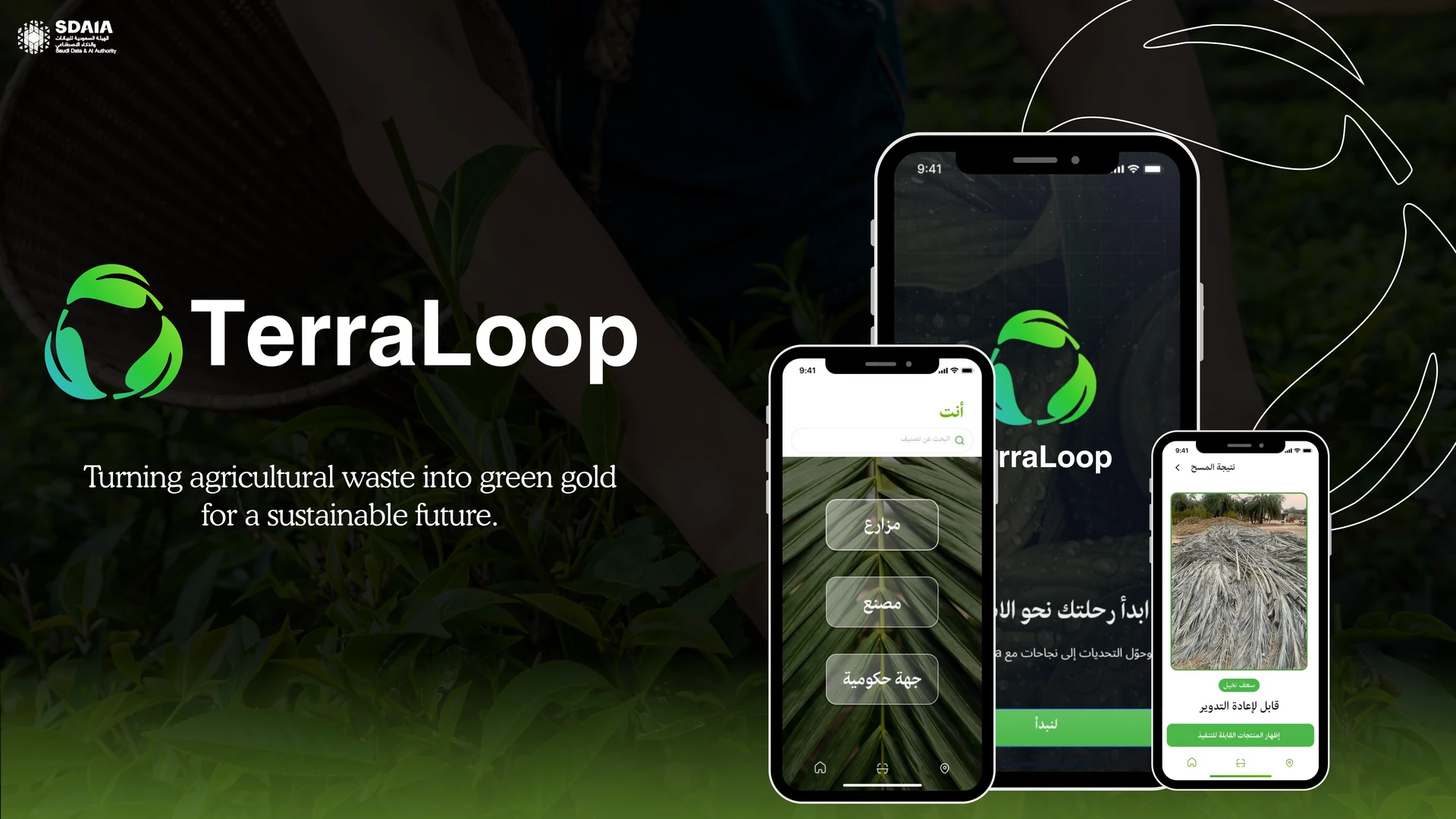 Mobile app concept
The problem, contribution, key decisions and experience. Switch to Full story for more detail.
Product concept & UX/UI
Mobile app concept
Circular economy · AI
Product system concept
THE STORY IN 30 SECONDS
A connected circular-economy product concept across several actors
Jump to the experienceDESIGN FOCUS
The design focus is the experience connecting multiple actors: make the farmer’s next action clear while preserving the handoffs needed for collection and reuse.
THE PROBLEM
Agricultural waste exists at scale, but the pathways between farms, collection, and productive reuse are fragmented. Burning and disposal can leave useful material disconnected from industrial demand. TerraLoop explores the connections needed to give that material another life.
tonnes of agricultural waste reported annually in Saudi Arabia
tonnes of plant waste reported as utilised
between available material and productive reuse
Historical context: figures reported in 2018 by the National Center for Palms & Dates, via Al Riyadh.
What if agricultural waste could be identified, routed, rewarded, and matched to its most useful next life?
THE SYSTEM
TerraLoop connects the farmer, AI classification, collection, rewards, logistics, and factories in one circular-value flow. The concept also includes smart weighing, pickup scheduling, factory dashboards, and a farmer-facing chatbot.
BEFORE THE SOLUTION
Problem & actor framing
Circular-value flow
Actor-specific journeys
Interface prototype
KEY PRODUCT DECISIONS
Farmer, factory, and government entry points distinguish the participants in the system.
A shared platform still needs an understandable starting point for each person using it.
The proposed image-classification result leads toward suitable recycling options and a farm location.
A label becomes useful when it helps someone decide what to do with the material.
Rewards and reuse products give the circular system a tangible return for participation.
The journey should communicate value as well as the work required to take part.
PRODUCT EXPERIENCE
EXPLORE THE CONCEPT
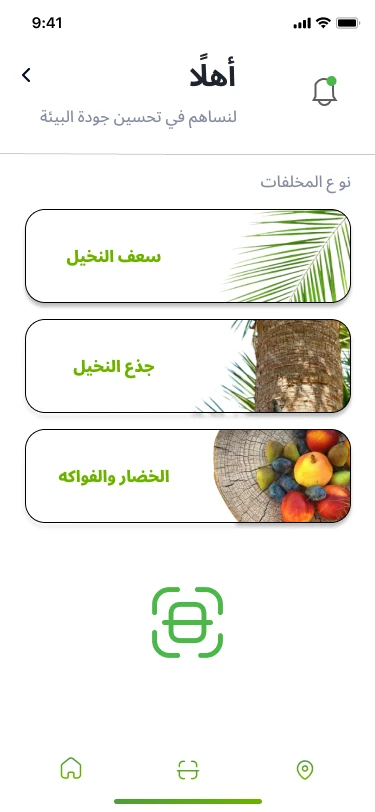
Start with a recognisable material category and a simple scan entry.
Proposed system illustrated through the original prototype screens.
Enter the relevant side of the platform.
Select a waste category or use the proposed scan interaction.
Confirm a location and explore reuse options.
Explore rewards and products made from recovered material.
The platform introduces its circular-economy purpose, then distinguishes farmer, factory, and government entry points.
Select a screen to view it larger.
Waste categories, a proposed scan result, and a farm-location screen connect identification with the next step.
Select a screen to view it larger.
Rewards make the return visible. The dashboard and recovered-material products express the broader circular-value concept.
Select a screen to view it larger.
OUTCOMES & REFLECTION
A connected circular-economy product concept across several actors
A prototype spanning material identification, location, rewards, and reused products
A visible journey linking agricultural material to potential productive reuse
The next validation should focus on the handoffs: can farmers, collectors, and factories understand what information they need to exchange, and when?